PubsandBeer
History: Home > De Pilsener Club
De Pilsener Club (Free House)
| Beer (sort) | Average Score (sort) | No. Samples (sort) |
|---|---|---|
| Browerij De Koningshoeven - La Trappe |  | 1 |
| Texels - Skuumkoppe |  | 1 |
| Gulpener - Ur-Hop | | 1 |
Visits Details
| Beer | ABV | Score | Notes |
|---|---|---|---|
| Browerij De Koningshoeven - La Trappe | 6.50 | | Smooth creamy sweet banana bread with spice, cloves and a low hop bitterness. |
| Texels - Skuumkoppe | 6.00 | | Sweet malty but refreshing wheat beer. |
| Gulpener - Ur-Hop | 6.00 | | Hoppy hazy with a bitter tropical fruits flavour and a hint of grass and salt to finish. |
About the De Pilsener Club
Summary of Beer Scores
| Total | |
|---|---|
 | - |
| 1 |
| 2 |
 | - |
 | - |
The pub is found in Amsterdam, Netherlands, 1012 PN.
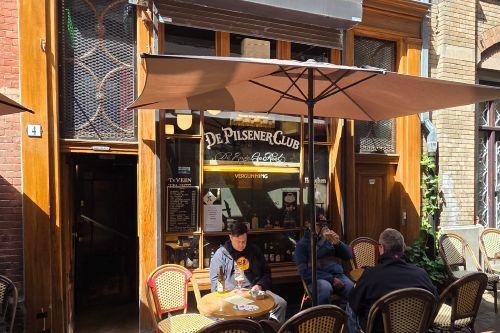
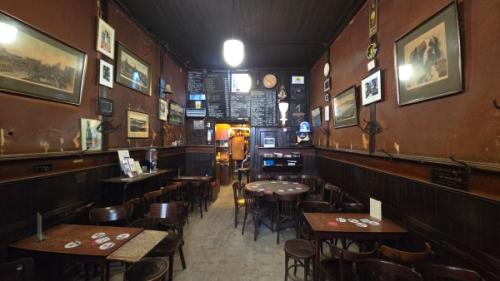
Founded in 1893 as the more German-sounding Zum Pilsener Club this small, unassuming bar retains an old-world charm untouched by the passing of time. It’s a classic example of the Dutch “Brown Café”, one of the traditional, cosy drinking establishments favoured by locals, which get their name from the thick patina of nicotine on their walls, accumulated over long decades when smoking in cafés was not only legal but practically de rigeur. The café has an unusual nickname by which it’s more commonly known – De Engelse Reet or “English Arse” – which deserves a word of explanation. The narrow alley on which it’s located was once a dead end, and Dutch slang for a dead-end alley is reet, or “arse”. And at the end of the alley was (and still is) the English Reformed Church, part of the city’s ancient Begijnhof or Beguinage. It therefore became known as the “English Alley” (or English Arse), and the bar has adopted the name as its own. The café itself is a narrow room with a high ceiling and classic spit-and-sawdust floor. There are only eight tables and, unusually for Amsterdam, no bar. Instead, the drinks are prepared in a small back room and served at the tables by a waiter. The window is partially obscured by a fine grille, so you can’t see the street from inside, and during the winter months a thick leather curtain is pulled across the door to keep out the cold, which makes it a perfect place to escape from the world, if only long enough to down a quick beer or jenever (Dutch gin) before setting off again.
We have visited this pub once, seen 3 different beers and tried them all.
Postcode: 1012 PN